
Hologram, transparent LED or reflected illusion: choosing the display
The desired audience effect and environment should determine the display technique—not the marketing name.
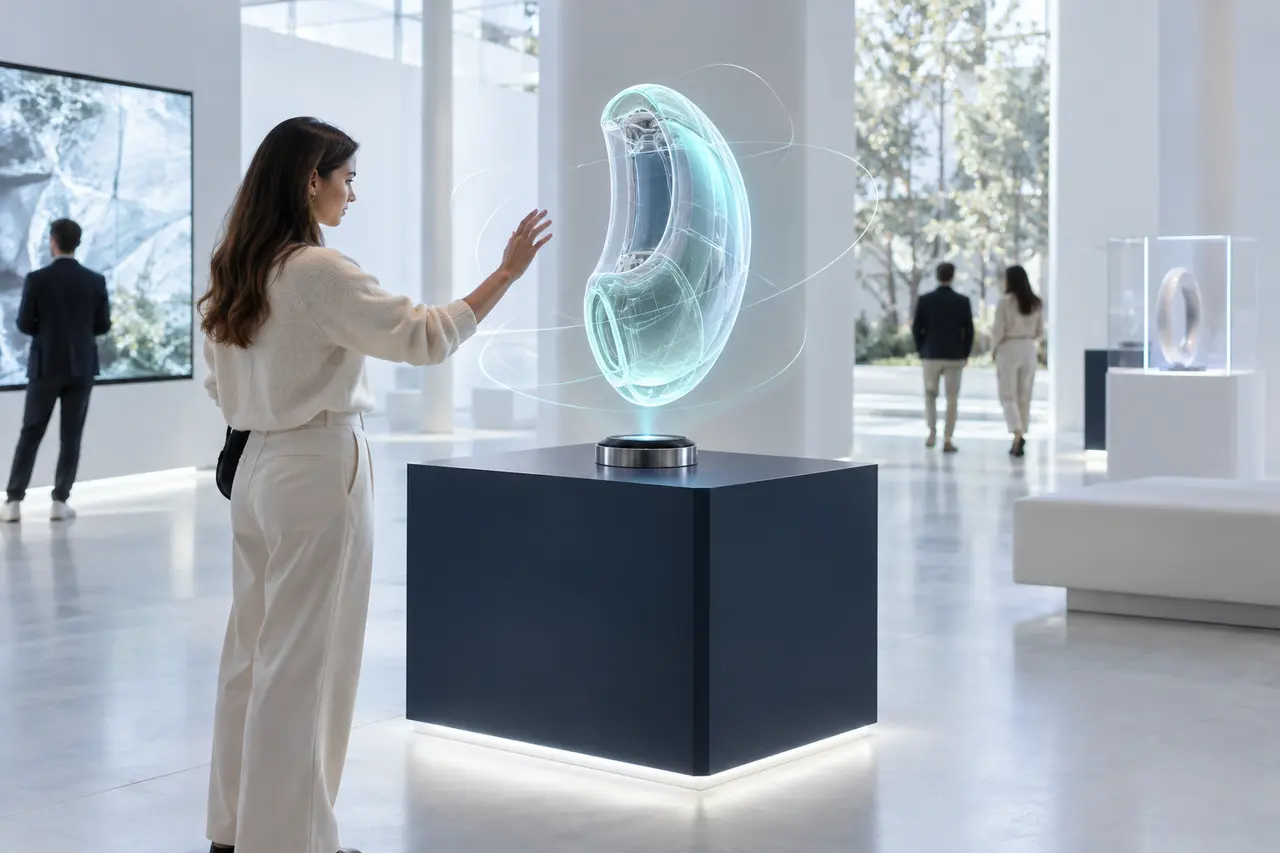
Clarify what “hologram” means for the project
The commercial term covers several techniques, including reflected floating-image illusions, transparent LED, transparent LCD and rotating displays. They do not produce the same effect or support the same environment.
Ask what the audience should perceive, how close they will stand and whether they must see physical objects behind the digital content.
Control lighting and sightlines
Reflected illusions usually need controlled backgrounds and carefully managed viewing positions. Transparent LED can work at larger scales but has pixel-pitch, brightness and structural considerations.
Test the system in conditions close to the real venue. Exhibition lighting and retail daylight can change the perceived effect substantially.
Create content for the medium
Floating and transparent content needs clear silhouettes, controlled contrast and motion that supports depth. Conventional full-screen video may look weak or visually confusing.
Content should be reviewed on the selected display during production rather than only on a laptop.
Plan operation and maintenance
Consider safe access, cleaning, content updates, ventilation, startup, shutdown and a fallback state. Permanent displays also need monitoring and clear responsibility for support.
A visually impressive prototype must still become a manageable daily system.
Discuss the decision in your context
Every project has different users, constraints and operating responsibilities. Appnautics can help frame the problem, test the critical uncertainty and define a practical delivery path.
Discuss your requirement →