Hologram and smart-display solutions in India

Give products and stories a visual presence beyond the conventional screen.

We design holographic and smart-display experiences using the display technique that best fits the content, viewing conditions and operating environment. The work can combine holographic illusion, transparent displays, layered content, synchronized media and sensor-led interaction.

Holographic display conceptsTransparent LED and display systemsSpatial content productionInteractive control and sensors
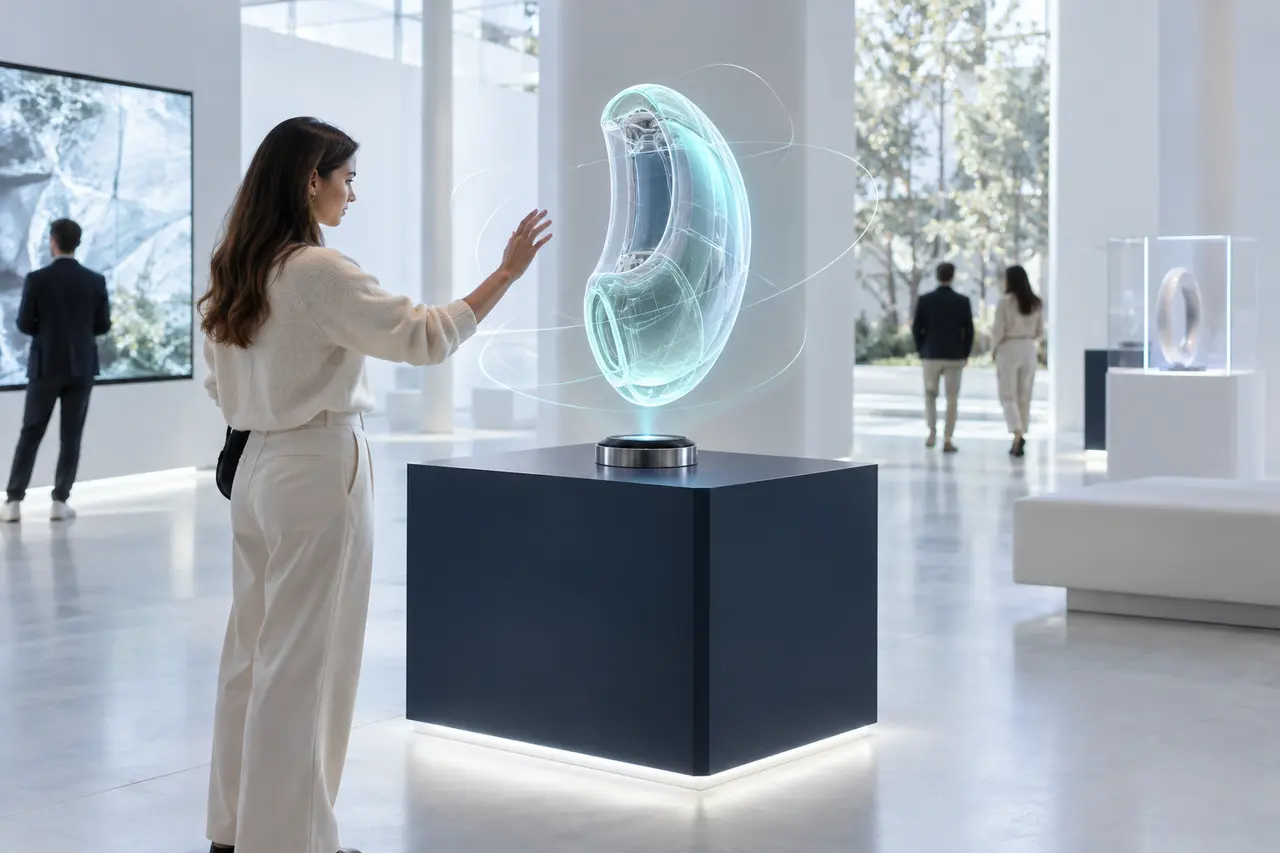
Holographic display concept presenting luminous three-dimensional content in a dark exhibition space.
Holograms & Smart DisplaysAppnautics Design Lab

What this service solves

The word hologram is used for several different display techniques. Some create a reflected floating-image illusion, some use transparent LED or LCD surfaces, and others use rotating or volumetric display hardware. Each has different requirements for brightness, viewing angle, scale and content.

Appnautics helps clients select the technique from the desired audience experience rather than from the equipment name. We consider the room, viewing distance, visitor flow, ambient light, content updates, safety and daily operation before specifying a system.

The display can be a self-contained visual moment or part of a larger experience centre with touch, gesture, projection, audio and connected control.

Capabilities

What Appnautics can deliver.

The scope is selected around the outcome and current stage—not forced into a fixed package.

01

Experience and display selection

Translate the desired visual effect into a practical display approach.

02

Spatial content direction

Plan scale, perspective, motion, contrast and visual sequencing for the display.

03

Transparent and layered displays

Integrate transparent LED, display glass and multi-layer media where appropriate.

04

Interaction and sensing

Connect presence, touch, gesture, RFID or operator controls to the content.

05

Playback and control

Configure media, scheduling, show states and content-management requirements.

06

Installation and calibration

Test sightlines, lighting, alignment, operation and technical handover on site.

Applications

Where the capability creates value.

Product showcases

Present product features through layered, floating or transparent visual storytelling.

Museum interpretation

Bring people, artefacts and processes into a focused exhibit moment.

Retail windows and interiors

Create high-visibility digital displays without closing the space behind them.

Corporate experience centres

Explain technology, processes and future concepts through guided spatial media.

Delivery path

A clear sequence with decisions at every stage.

01

Define the visual outcome

Clarify what the audience should perceive and from where.

02

Evaluate the environment

Review lighting, scale, sightlines, distance, access and operating hours.

03

Prototype the technique

Test the display and representative content before full production.

04

Produce and integrate

Develop content, playback, control, structure and related interaction.

05

Commission and support

Calibrate on site and document operation, maintenance and updates.

Technology

Selected for the system—not for a trend.

The final architecture depends on users, environment, integrations, security, support and product lifetime. Relevant experience includes:

Holographic illusion systemsTransparent LEDTransparent displaysReal-time 3DMotion sensorsTouch interfacesMedia serversShow control
Frequently asked questions

Useful answers before the first discussion.

Is every hologram a true three-dimensional hologram?

No. Commercial experiences use different optical and display techniques. We explain the available options clearly and select one suited to the desired effect and environment.

Can a holographic display work in a bright room?

Some display systems tolerate ambient light better than others. Brightness, contrast, reflections and sightlines must be tested for the actual venue.

Can visitors interact with the display?

Yes. Interaction can use touch, proximity, gesture, RFID, buttons or an operator interface depending on the experience.

Can the content be changed later?

Yes, when update and content-management requirements are included in the system design.

Do you provide both equipment and content?

We can coordinate the complete solution or work with appointed equipment, fabrication, AV and creative partners.

Planning a holograms & smart displays project?

Share what must change, who will use it and what constraints are already known.

Start a conversation →
Have a project in mind?Let's talk