
Custom hardware development company in India

Prototype connected hardware with the software and operations already in view.

We develop custom electronic and embedded prototypes for connected products and interactive systems. Hardware decisions are coordinated with firmware, enclosure constraints, connectivity, backend services and the people who will install, use and support the device.

Electronics prototypingEmbedded firmwareSensor and actuator integrationDevice-to-cloud systems
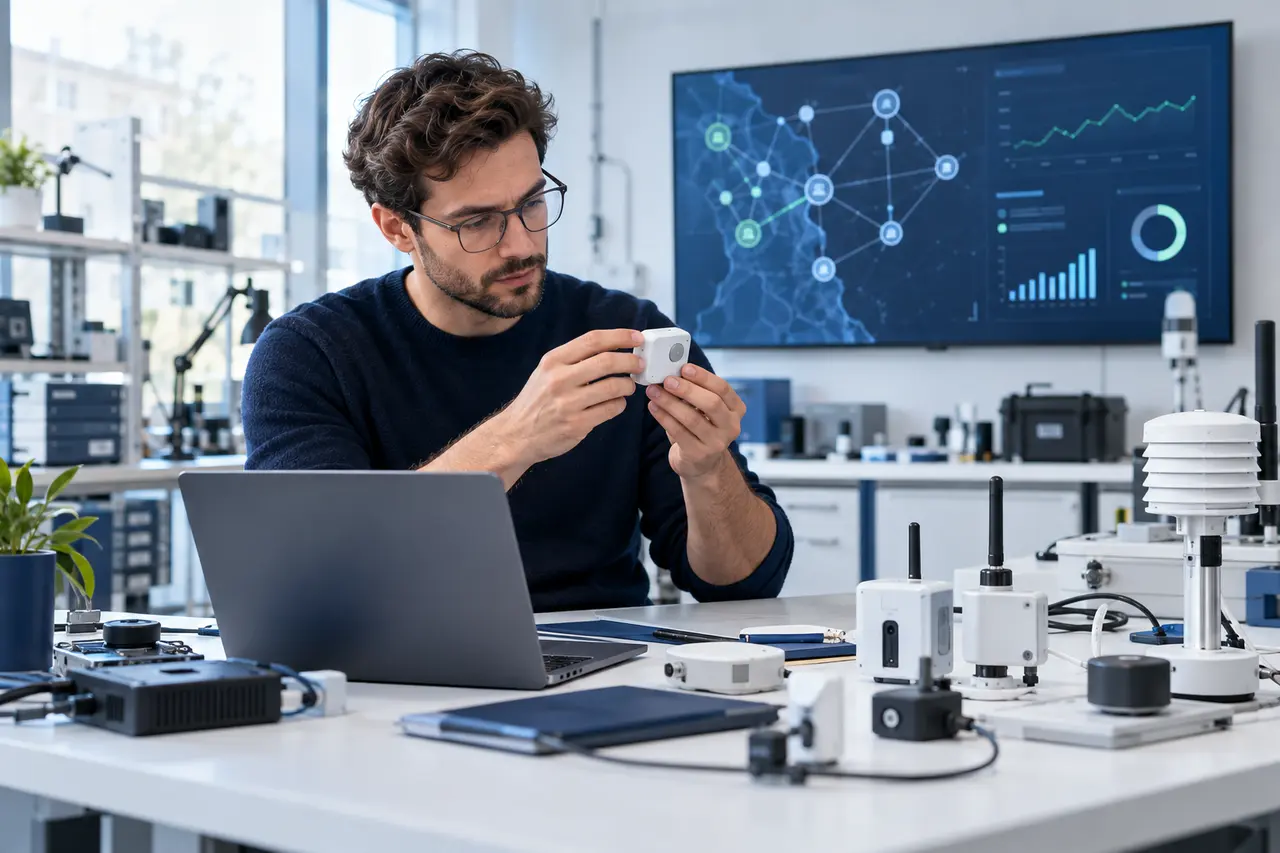
Engineer testing a custom electronics and sensor prototype on a workbench.
Custom Hardware DevelopmentAppnautics Design Lab

What this service solves

A hardware prototype is useful when it answers the right uncertainty: sensing accuracy, interaction, connectivity, battery life, mechanical fit, deployment or user behaviour. Building too much too early increases cost without necessarily reducing product risk.

Appnautics helps define the prototype objective, selects components and interfaces, and connects the physical device with control software, mobile applications or cloud services. This makes it possible to test a complete journey rather than an isolated circuit.

Where manufacturing engineering, certification or high-volume production is required, we define the handoff requirements and collaborate with appropriate specialist partners.

Capabilities

What Appnautics can deliver.

The scope is selected around the outcome and current stage—not forced into a fixed package.

01

Requirement and risk definition

Clarify the environment, inputs, outputs, constraints and decision the prototype must support.

02

Electronics and component selection

Select microcontrollers, sensors, communication modules and supporting components.

03

Embedded firmware

Implement device logic, communication, state, error handling and controlled updates.

04

Sensors and actuators

Integrate touch, proximity, motion, RFID, BLE, relays, lighting and other physical interfaces.

05

Prototype control software

Create configuration, testing, control and diagnostic interfaces for the device.

06

Backend integration

Connect identity, telemetry, assignments, alerts and dashboards when the product requires it.

Applications

Where the capability creates value.

Interactive installations

Custom control and sensing for visitor interaction and spatial media.

Connected field devices

Capture activity, status or responses and synchronize them securely.

Retail and experience hardware

Trigger content, lighting or displays through presence, RFID and touch.

Proof-of-concept products

Validate a difficult technical and user assumption before wider investment.

Delivery path

A clear sequence with decisions at every stage.

01

Define the proof

Choose the questions the prototype must answer and the conditions it must survive.

02

Architecture and components

Design power, processing, interfaces, connectivity and data flow.

03

Build the prototype

Assemble electronics, firmware and the minimum supporting software.

04

Test in context

Measure behaviour, failure modes, usability and environmental constraints.

05

Prepare the next stage

Document findings and requirements for refinement, certification or production partners.

Technology

Selected for the system—not for a trend.

The final architecture depends on users, environment, integrations, security, support and product lifetime. Relevant experience includes:

Raspberry PiOdroidESP32Arduino-compatible systemsBluetooth LEWi-FiRFID and NFCTouch sensorsCamerasCustom control software
Frequently asked questions

Useful answers before the first discussion.

Does Appnautics manufacture hardware at scale?

Our core strength is product definition, functional prototyping, embedded integration and connected software. Where mass manufacturing is needed, we prepare the technical handoff and work with suitable production specialists.

Can you improve an existing prototype?

Yes. We can review electronics, firmware interfaces, connectivity, backend dependencies and test evidence before recommending the next iteration.

Can the hardware connect to a mobile app or dashboard?

Yes. Device communication, onboarding, identity, telemetry and remote operations can be designed with the mobile and cloud components.

Do you work with sensors and touch technology?

Yes. Our work includes proximity, motion, RFID, Bluetooth, touch sensing, cameras and other interfaces used in connected and interactive systems.

How long does a prototype take?

Timing depends on component availability, enclosure needs, firmware complexity, connectivity and what the prototype must prove. We estimate after a focused discovery stage.

Planning a custom hardware development project?

Share what must change, who will use it and what constraints are already known.

Start a conversation →
Have a project in mind?Let's talk